Art Therapy

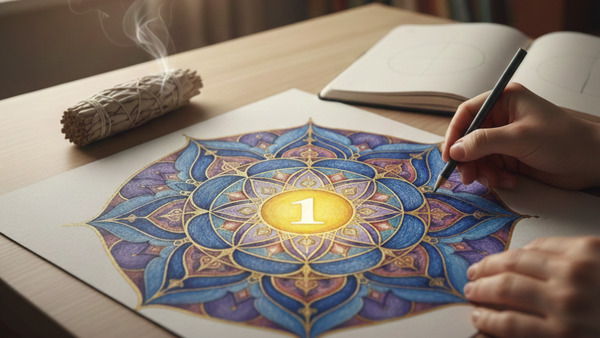
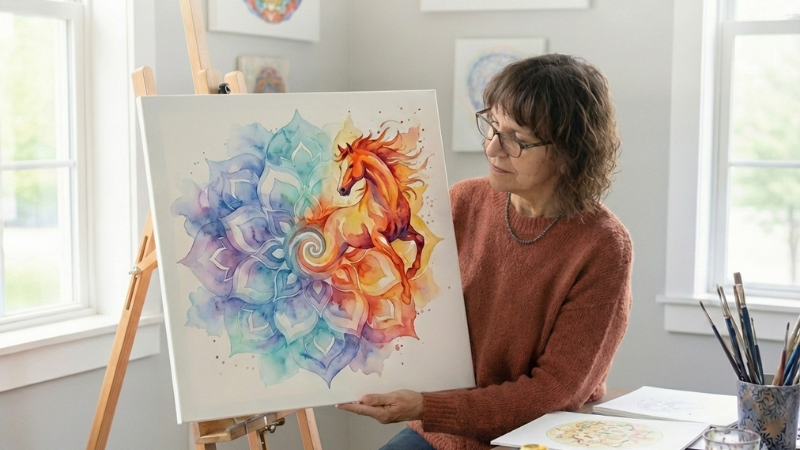
A blue image with the words Summer Mandala.

A Mid-Year Energy Check-In

Here we are on July 4th, the 248th anniversary of the United States. But I’m not here to talk about the news, politics, or the state of the world. There’s already so much noise on our screens, in our feeds, at the water cooler. Instead, I want to talk about something quieter, something closer in: you. What’s going on inside you—your body, your breath, your energy? Let’s take a moment for a Chakra Check-In. The Chakra system flows along the spine, a subtle energy map guiding how we take in, hold, and release energy. Even if you’ve never studied chakras, your body knows them. These sensations are messages from your subtle body, whispering truths before your mind can form them. Right now, many of us are feeling zapped—tired, ungrounded, emotionally full. And it makes perfect sense. So I’ve created something special to support you during this energetic moment: 🌞 A Summer Retreat for Restoration & Resilience Join me in a nurturing, creative space where we’ll explore the energy body through Mandala Making, meditation, and guided awareness. Together we’ll: 🌀 Work with the Chakra and Somatic energy systems 🎨 Express through therapeutic art 🔮 Receive Reiki-infused support and insight ✨ Reconnect to what lights us up—from the inside out This is a gentle, sacred space to restore your energy and feel seen—just as you are. To maintain an intimate atmosphere, the group size will be capped at 6 participants, and the replay will be available only to participants. I will release the dates for this 3-day workshop soon. In the meantime, you can sign up for my interest list for my upcoming Mandala-Making Healing Group. Click Here: The Mandala-Making Healing Interest List

A Mid-Year Energy Check-In Read More »

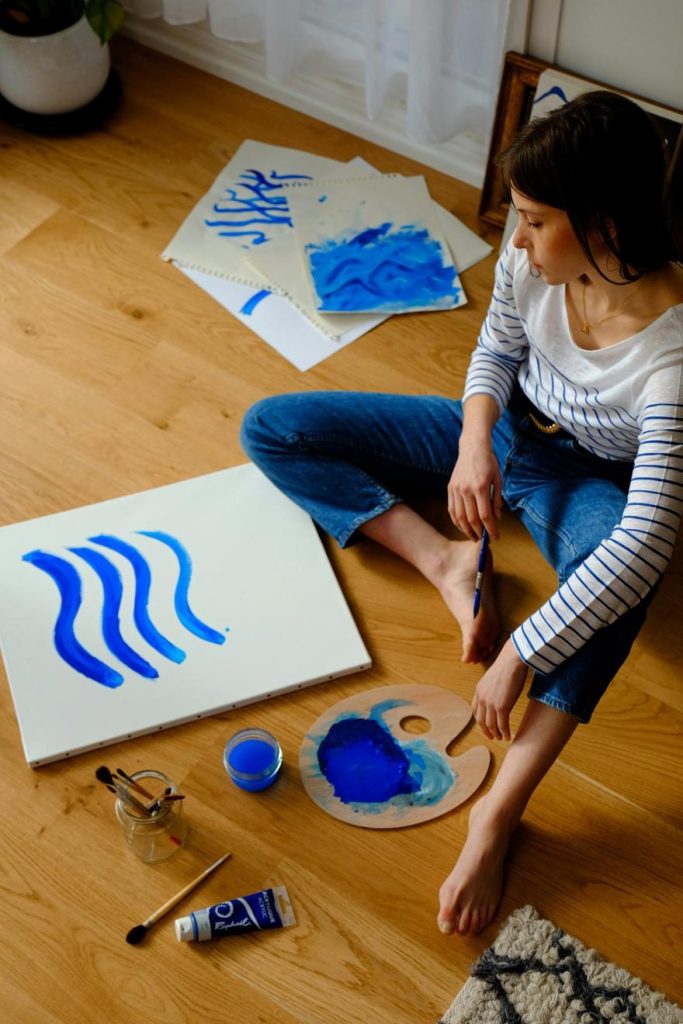
A woman is sitting on the floor painting stripes onto a canvas with blue paint.

What is Art Therapy?

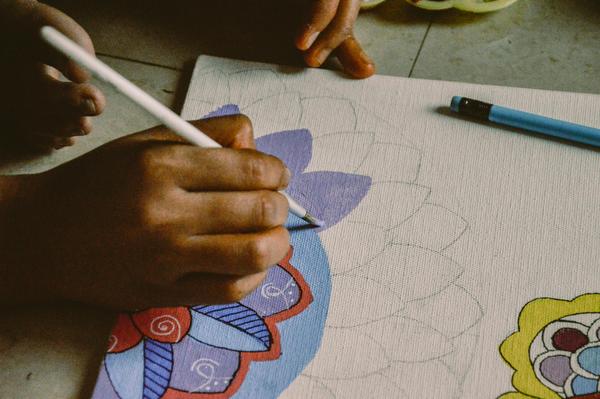
I used to get that question a lot, but now, almost 30 years after becoming an art therapist, art therapy has become much more mainstream. The question has shifted from what it is to how you use it. Art Therapy uses the Creative Process and mediums to communicate and explore aspects where words fall short. While words can explain or assist in processing what emerges during sessions, it is the experience with the art form that fosters insight and transformation. In other words, art can sometimes support you with deeper access to past wounds that affect your life in the present. Art Therapy utilizes art materials provided at the therapist’s discretion, which may include pencil, paint, clay, collage, or other options. Dance/Movement Therapy, as the name implies, uses dance and movement to explore and interpret the material the client brings to the session. Drama Therapy includes acting, performing, and expressing to reach and connect with what the client is working on. Music Therapy uses sound, song, melody, instruments, and voice to address clients’ needs. Poetry Therapy is where the form and sound of the words reach what the left-brain language misses. Writing, speaking, and reflecting are part of this process. There are overlaps, and depending on the practitioner’s background, training, and experience, therapists utilize elements from other modalities to address their clients’ needs. Art therapy is a profession that requires at least a master’s level of study and training in mental health and psychology, as well as the utilization of art media and creative processes to assist people in coping with various internal challenges. In the USA, the profession is governed by the American Art Therapy Association (AATA) and the American Art Therapy Credentials Board (ATCB). They establish the standards and requirements to ensure that art therapists meet the necessary educational and practicum hours as well as fulfill the professional, legal, and ethical criteria needed to practice under the title of Art Therapist, which includes passing an exam. In New York, there is a license for Creative Arts Therapists (LCAT). LCATs must meet the standards set by AATA and ATCB and pass the New York State Exam administered by the New York State Education Department (NYSED). In New York, the LCAT is an umbrella for all CATs seeking licensure as a Mental Health Practitioner, and these are the five categories included: What Can Art Therapy Help With? Art therapy has many applications, including assisting adults and children with cognitive impairments, improving eye-hand coordination, enhancing decision-making skills, and supporting addiction recovery. In my private practice, I have witnessed adults transitioning from disorganization and scribbles to organization and form. I am reminded of Katherine, who was an artist. Her work was meant to be expressive, but instead emerged as a muddy haze. She could not find direction in her job or her relationships. She only knew she was angry and confused. Over time, while continuing to create her art in and out of sessions, giving occasional directives, and being her companion on this journey, her work became expressive and clear. Is Art Therapy Evidence-Based? Yes, Art Therapy is an evidence-based practice. Multiple research studies have supported its effectiveness for a variety of mental health conditions. Studies include neuroscience connections in that art-making affects brain activity and emotional regulation. From the start, Margaret Naumburg, educator and psychoanalyst, considered the “mother of art therapy,” began to explore the use of art therapy in the 1940s and published case studies. Adrian Hill, an artist and writer, formalized the term “art therapy” in 1942 and explored its use in mental health settings. More recently, Girija Kaimal, an art therapist, professor, and researcher at Drexel University, has conducted studies exploring the effects of art therapy on stress and brain activity. Other university research teams, including those from Drexel University and Indiana University, have also carried out studies. This is How I Discovered Art Therapy I was going to be an artist. I studied art from California to New York, practicing my skills and showcasing my work. Then, I treated myself to a summer visiting my family in Greece. I fell in love with Greece and decided to extend my stay after getting a job teaching English and securing an apartment with a view of the Acropolis. Once settled, I took what was supposed to be a short trip to the island of Chios for a Tai Chi retreat. While there, I was riding on the back of a Moped with a friend when a drunk driver hit us head-on. The next thing I knew, I was in a hospital in Athens, surrounded by friends and family. It took me two years to fully recover. My recovery included physical and art therapy. I began to use my art in ways I had not before, and it felt more meaningful to me. After my recovery, I began teaching art at an American college in Greece and acquired an art studio and an apartment near my workplace. While I loved teaching and my students, my interests expanded beyond helping my students with technique and form. My art therapist at the time encouraged me to come to New York to study art therapy under Art Robbins specifically. This meant coming to Pratt Institute, which also has fine arts programs. I ended up completing my art therapy studies there and getting a master’s in fine arts. After graduation, I found work teaching art to Special Education students in NYC. At the time, there was no line for “art therapy,” so I taught art to K-12 Students. In the classroom, I was told I could do art therapy, but I could not call it that at the time. In Special Education, there is a lot of trauma. Given my accident, early life experiences, and work with traumatized children, specializing in trauma felt like a natural choice when I started my private practice. I quickly devoured trainings that I loved and that provided me with tools to work more effectively with my clients.

What is Art Therapy? Read More »

Scroll to Top