Art Therapy

May and Stage 5 of the MARI Mandala: Protection, Boundaries, and Becoming

As we move into May, we also enter Stage 5 of the Great Round in the MARI Mandala. This stage carries a very different energy from Stage 4. Where Stage 4 often reflects emergence and new life taking shape, Stage 5 feels more defined. It speaks to identity, boundaries, and the growing need to protect what matters. In therapy, this stage can feel especially meaningful. It often reflects the point where a person begins to sense themselves more clearly. There is a stronger awareness of what feels safe, what feels important, and what needs care. Stage 5 brings attention to self protection, self preservation, and the early formation of healthy boundaries. In the MARI system, Stage 5 is known as The Target. That image holds a lot. It suggests focus and direction, but also exposure. There can be clarity here, along with vulnerability. At times, this stage may bring a stronger sense of inner structure, helping us notice patterns, rhythms, and what belongs in our lives. At other times, it may leave us feeling seen, pressured, or emotionally exposed. That is part of what makes Stage 5 so relevant to emotional growth. This stage is not only about defense. It is also connected to the Explorer, which adds another layer of meaning. Alongside the instinct to protect, there is also a desire to move outward. Curiosity, freedom, adaptability, and expansion are all present here. One part of us wants to explore new possibilities, while another part is learning how to stay grounded and safe. This inner tension is deeply human. We want growth, but we also want security. We want freedom, but we also need boundaries. From a Jungian perspective, every MARI stage includes both light and shadow. The shadow is not something negative or shameful. It simply points to what has been hidden, denied, or pushed out of awareness. In Stage 5, that shadow may appear through defensiveness, fear, control, or avoidance. It may also show up in the ways we protect ourselves when something inside still feels fragile. This stage invites honest reflection. What am I protecting right now?What feels worth preserving?Where am I setting boundaries from wisdom, and where am I reacting from fear? These are powerful therapeutic questions because Stage 5 often points to the search for center. It marks a movement away from unconscious innocence and toward greater autonomy. There is a growing awareness of self in relationship to the outside world. That process can be empowering, but it can also feel tender, especially when we are adjusting to change or learning to trust ourselves more deeply. People may experience this stage in many different ways. Some may feel a stronger need for privacy or alone time. Some may become more protective of their energy, routines, or emotional space. Others may feel drawn to structure, order, or familiar rituals that create steadiness. There may also be discomfort with uncertainty or a stronger reaction to outside demands. All of these responses can be understood with compassion. They may be attempts to stay connected to the self while something important is still taking shape. The mythological symbols connected to Stage 5 are the Witch and the Magician. These archetypes speak to transformation, ritual, and the focused energy required for change. There is something alchemical about this stage. It can feel like being inside a vessel where pressure builds, not to harm us, but to help something new form. In that sense, emotional pressure is not always a sign that something is wrong. Sometimes it is part of healing and becoming. Growth is not always comfortable. Sometimes it asks for protection before it asks for expression. That may be one of the deepest truths of Stage 5. Something within has begun to emerge into form. It is more visible now, more defined, and because of that, it may need care. Protecting ourselves during this phase is not always about shutting down. Often, it is about honoring what is still tender and allowing it to develop with patience. In this stage, we are not only defending ourselves. We are protecting who we are becoming. There is also a natural connection between May and the number 5. In numerology, 5 is linked to movement, freedom, curiosity, and change. It carries an adventurous energy, but also a certain restlessness. This mirrors Stage 5 beautifully. The same energy that supports growth and exploration can also lead to escape, overextension, or instability when we are not rooted in ourselves. That is why boundaries matter so much here. May offers an invitation to slow down and ask what truly needs care right now. Not everything needs to be shared immediately. Not everything needs to be rushed. Some parts of healing need privacy. Some parts of transformation need time. Some parts of growth need a safe container before they are ready to be seen. This is where therapy can be especially supportive. It can help create space to understand what you are protecting, why it matters, and how to build boundaries that support healing rather than isolation. Stage 5 reminds us that protection can be loving. Boundaries can be wise. And tending to ourselves is part of transformation. As May unfolds, Stage 5 asks a gentle but important question: What in me is asking for protection right now? There is wisdom in listening for the answer. There is wisdom in honoring what is still becoming. And there is wisdom in creating the conditions for real healing, one thoughtful boundary at a time.

May and Stage 5 of the MARI Mandala: Protection, Boundaries, and Becoming Read More »

April and MARI Stage 4: The Courage to Begin

In the Great Round of the MARI, Stage 4 corresponds with April, the fourth month of the Gregorian calendar. This stage lives at an important threshold. The MARI is a circle, and it is also divided into four quadrants. The upper half reflects consciousness, while the lower half reflects the unconscious. Stage 4 rests along the place where something from below begins to rise into awareness. What has been quietly forming is no longer staying hidden. It is beginning to reach toward the light. This is part of why April can feel so tender. Like the first signs of spring, something in you may be stirring. A bud on the branch. A shoot pushing up through the soil. A quiet sense that something new is beginning, even if you cannot fully name it yet. What was once beneath the surface is now asking to be seen. This is the season of emergence. Stage 4 is about beginning, but not in a big, fully formed, confident way. It is not the moment of full bloom. It is the softer beginning that comes before that. The first breath. The first movement. The first small yes toward bringing something into form. Because of that, this stage can feel both hopeful and vulnerable at the same time. You may sense that something in you is ready. A new idea. A creative project. A different way of relating to yourself. A desire that has become clearer. A part of you that wants more space to exist. And still, what is emerging may not feel strong yet. It may feel uncertain, delicate, or hard to trust. You may feel the pull to begin, while also feeling unsure of how. That is very much the energy of Stage 4. This is often a time to come back to the basics and care for yourself in simple, steady ways. Rest matters here. Food matters. Rhythm matters. Encouragement matters. These are not extras. They are part of what helps something new feel supported enough to grow. When a new part of you is trying to come forward, it needs care. It needs enough safety to unfold. Stage 4 also touches something very deep. It can bring up early developmental themes, especially around the mother child relationship. At this point in the cycle, there may be a longing for support, reassurance, or permission. There may also be a pull toward passivity, dependency, or waiting for someone else to tell you it is okay to take the next step. This is not a sign that you are doing anything wrong. It is part of being human. It is part of the cycle of growth. When we are on the edge of something new, it is common for part of us to want to move backward before moving forward. We may want certainty before action. We may want someone else to guide us. We may want to stay in the realm of possibility a little longer rather than face the discomfort that comes with choosing. Stage 3 holds many possibilities. Stage 4 asks for a choice. And choice can feel tender. To choose is to begin giving shape to what is emerging. It is to say yes to one thing, even if only for now, and to let other possibilities wait. It is to begin claiming your place in your own life. That is why this stage can stir so much emotion. Underneath the surface, the question is often not only, “What am I ready to begin?” It may also be, “Am I really allowed to begin? Am I allowed to take up space? Am I allowed to trust what I feel? Am I allowed to bring something of my own into the world?” These are deep questions. They often come from more than the thinking mind. They may rise from old emotional layers, early experiences, and relational memories. They may touch places in us that remember what it felt like to be seen or not seen, supported or interrupted, welcomed or dismissed. So if April feels emotionally tender, that makes sense. If beginning feels less like a dramatic leap and more like standing at the edge of yourself with shaky hands and a hopeful heart, that makes sense too. A Deeper Look at Stage 4 Stage 4 is the place where inner life begins to take outer form. What has been developing quietly within now wants expression in the visible world. A feeling, idea, desire, or emerging part of the self begins to move into awareness. This can feel vulnerable because what is coming forward is still new. It may not yet feel steady or established. It needs gentleness. It needs attention. It needs support. This stage can also awaken questions around dependency, care, and permission. You may notice a part of you that wants to pull back, become passive, or wait for someone else to authorize your next step. That response is not unusual. It reflects the natural tension that often comes with growth. Where Stage 3 held open many directions, Stage 4 asks you to choose. Choosing does not mean having everything figured out. It simply means beginning to give shape to what wants to unfold. And when what is emerging matters deeply to you, that choice may feel especially tender. April invites us to notice what is just beginning and respond with steadiness rather than pressure. This is not the time to force full bloom. This is the time to support what is just starting to break through. Reflection and Grounding Practice for Stage 4 Before you begin, stand with your feet about hip width apart and place your hands on your hips. Let your shoulders gently move back and allow your head to rise. Notice what it feels like to take up space. If that feels awkward or uncomfortable, simply notice that and stay with yourself. Breathe in for a count of four.Hold for four.Exhale for four.Pause for four. Repeat this cycle four times, if that

April and MARI Stage 4: The Courage to Begin Read More »

February. Listening Before Knowing. Mandalas, the Body, and Early Awareness

February. Listening Before Knowing.

Mandalas, the Body, and Early Awareness February often feels different from January. The push to begin softens, leaving a quieter, more interior experience. Many people notice this as a sense of tenderness, uncertainty, or simply not knowing what comes next. From the lens of the MARI Mandala, February corresponds with Stage 2 of the Great Round. This stage reflects a time when experience is still unformed. Sensations, impressions, and emotions arise before they have language. It is a state of early awareness, where the body leads, and the mind follows later. In this stage, the nervous system is especially receptive. We feel more. We absorb more. Our bodies often register what is happening long before we can make sense of it. This can be deeply restorative when there is support and attunement. Without it, this same openness can feel disorganizing or overwhelming. In my work as an art therapist, I often see February mirror this inner landscape. Clients may describe feeling “off,” more emotional, more porous, or less anchored in certainty. Nothing is necessarily wrong. This is often the psyche doing exactly what it needs to do. Although we move through a new stage of the Great Round each month, the larger rhythm of the year also matters. Numerologically, 2026 reduces to the number one, which aligns with Stage 1 in the MARI system. This stage speaks to beginnings, initiation, and the first spark of something new. February, then, lives in an interesting in-between. It is held by the energy of beginning, while still immersed in a pre-verbal, intuitive state. There may be a longing to move forward paired with a need to slow down. A sense of readiness alongside vulnerability. This is where somatic therapy and art therapy can be especially supportive. When experience feels diffuse, the body offers a reliable point of orientation. Mandala-making provides structure without forcing clarity. The circle creates a container, while allowing emotion, memory, and sensation to emerge naturally through color, form, and movement. Mandala therapy, particularly when informed by the MARI framework, supports embodiment and self-awareness. It helps organize internal experience in a way that feels gentle and respectful of timing. There is no pressure to explain or interpret. The image becomes a bridge between inner experience and conscious reflection. In trauma-informed therapy and attachment-focused work, this kind of nonverbal expression is especially meaningful. Many early experiences live in the body rather than in narrative memory. Creative processes allow access to these layers without reactivation or overwhelm. February invites this kind of listening. It asks us to pay attention to what is subtle. To notice what the body is holding. To trust that not everything needs to be named right away in order to be meaningful. In a culture that often values certainty and speed, this can feel unfamiliar. Yet healing, integration, and growth often begin in these quieter spaces, in moments of sensing rather than deciding, of feeling rather than fixing. Mandala-making reminds us that even what feels formless has intelligence. Even what is unclear carries information. And the body, when given the right conditions, knows how to guide us toward balance. February does not rush us.It invites presence. And sometimes, that is exactly where the work begins.

February. Listening Before Knowing. Read More »

December Reflections. Mandalas and the Return to Wholeness

December Reflections. Mandalas and the Return to Wholeness

As the year bows its head, reflection arrives like a quiet visitor. The days move quickly, yet my inner clock begins to slow. I listen more closely. I choose what matters. This year opened with a bright drumbeat. A new team formed around my work. Paint returned to my hands. I felt spark and flow. Then life asked me to tend what was tender. My mother became very ill, and our path turned sorrowful. Grief rearranged my calendar and my cells. My work changed. My energy changed. I changed. I remain devoted to healing the Mother Wound. I am leaning even more into the medicine of art therapy, mandala making, and intuitive coaching. I am now a Certified Intuitive Coach, and that training has woven a golden thread through everything I offer in therapy and groups. If you would like to hear how this looks in session, I am happy to share. Why mandalas in therapy A small story. My very first painting as a pre-kindergartner was a mandala, though I did not have that language yet. I called it a Turtle. I can still feel the easel towering above me, the colors singing, my four-year-old self stepping back with a grin that felt larger than the room. Pure exhilaration. The circle kept finding me. In undergraduate art school, I drew a series called Avocados, each with a seed or an opening at the center. In graduate school, my drawings leaped off the page and became sculpted circular forms. The shape of the mandala has been walking beside me for a long time. The MARI Mandala Assessment in my practice As an art therapist I grew curious about the MARI method, the Mandala Assessment Research Instrument created by Joan Kellogg. MARI describes a cyclical journey through twelve, sometimes thirteen, stages often called the Great Round. The map is influenced by Carl Jung’s work influences the map and offers a compassionate way to witness where we are in our process. In therapy, MARI can illuminate strengths, name transitions, and support clarity for next steps. December, Stage Twelve, and the return to wholeness Here we are in the twelfth month. In MARI, the twelfth stage invites a return to wholeness through acceptance. We soften our grip. We gather what the year taught us. We allow completion to prepare the soil for beginnings already stirring. A gentle mandala practice for this month I would be honored to witness what you create. You can send a photo of your mandala through my contact page or share it on Instagram and tag @creativehealingintegration. Circle of practice I will be opening a monthly circle that journeys through the Great Round together. Each month, we will explore one stage, create a mandala, and translate its symbols into language that supports healing and next steps. This is a sweet spot where science, creativity, and intuition braid into something quietly powerful. If that resonates, add your name to the interest list, and I will keep you posted. May this month bring you a gentle settling. May acceptance open the door. May your circle lead you home. Work with me I provide art therapy and trauma therapy in New York City and online. My approach integrates the MARI Mandala Assessment, expressive arts, and intuitive coaching to support nervous system regulation, grief work, and Mother Wound healing. If you are ready for a soft return to yourself, you can schedule a consultation, and we will begin. With care,Mari Grande, LCAT, ATR BC

December Reflections. Mandalas and the Return to Wholeness Read More »

What Italy Taught Me About Trusting the Unplanned

What Italy Taught Me About Trusting the Unplanned

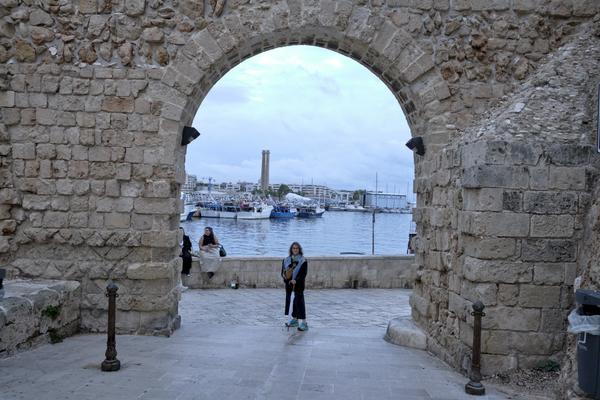
A long awaited trip to Italy turned into a lesson in trust, creativity, and the quiet work of returning to center. Join me in The Mandala Corner this November. I had been planning this trip for months. A direct flight to Italy. An itinerary filled with highlights from Puglia, Naples, and the Amalfi Coast. Even our kittens were set. We found a kind and competent live in sitter. Everything felt beautifully aligned. What could go wrong At first, everything went as expected. The usual travel bumps, small delays, moments of adjusting to a new rhythm. All part of the adventure. Until day four. A message came from our cat sitter. One of our kittens was in distress. She took him to the vet, who quickly referred him to the emergency room. They did not know if he had ingested a toxin or was having a neurological event. My heart dropped. This was not supposed to happen. Our kittens are only seven months old. They are healthy, playful, vaccinated, and full of life. Suddenly one of them was fighting for his. He was admitted to the intensive care unit. He was limp, blind, and unable to stand or eat. Even the specialists were not sure what was happening or if he would survive. My dream vacation became a stress vacation. Jet lag, worry, and sleepless nights waiting for updates. By day six, a small miracle. He turned a corner. The vets said he could go home to be monitored. The relief was enormous. I am happy to share that today he is thriving. In fact, he is playing fetch with me as I write this. As for me, the exhaustion settled in. The sore throat and cough were not just stress. I had COVID. But that is not really the story. The story is about what happened within all that uncertainty. How life gently pulled me out of my linear plans and back into the circle. The Circle That Holds Between vet calls and naps, I found myself sketching mandalas. I began noticing circles everywhere. Church domes, tiled floors, and the petals of ancient mosaics. Circles within circles. No beginning. No end. Only balance, symmetry, and quiet containment. Each one seemed to whisper, You are held. The circle reminds me of the womb. It is that original place of safety and creation. It is also the place we spend much of our lives trying to understand or return to. When things fall apart, the circle invites us back. It does not demand control or answers. It simply holds what hurts until it is ready to heal. In the MARI system, the Mandala Assessment Research Instrument, rosettes and flowers appear in Stages 8 and 9. These are the stages of personal ripening and authentic connection. Stage 8 speaks to autonomy, will, and creativity. Stage 9 expands that energy outward into connection, contribution, and love. Italy showed me both. The joy of blossoming and the necessity of softening. Of letting go of what I thought I was there to do and listening instead for what the moment asked of me. When Plans Change Do your plans always unfold the way you hope Mine did not. It is okay to feel disappointed when life takes a turn. When you only have eight days to explore a dream destination, there is not much space for wallowing. I also worried that I might have unknowingly passed the illness to others. That too became part of the lesson. Not blame, but awareness. A pause. A breath. An invitation to sit with the unknown. Sometimes we are called to trust life. Not to like or fully understand what is happening, but to allow it to move us gently back toward center. Returning to Wholeness Everywhere I looked, Italy offered reminders of the circle’s wisdom. Rose windows in cathedrals. Halos in sacred paintings. The Eucharist. Even the crown of thorns. Each one spoke of wholeness. Wholeness is not perfection. It is presence. Even in disruption, life keeps inviting us back to that original shape. The circle that heals, holds, and reconnects. I will be exploring more of this in The Mandala Corner this November. If you feel called to return to your center, I invite you to join me. With care,Mari Grande, LCAT, ATR BC

What Italy Taught Me About Trusting the Unplanned Read More »

The Circle Within. Exploring Mandalas

The Circle Within. Exploring Mandalas

As a therapist, I return again and again to the wisdom of circles. They are everywhere. The sun that rises and sets. The rings inside a tree. The iris of an eye. A circle has no clear start and no finish. It offers a quiet wholeness that can hold everything. When I rest inside this truth, I feel both comforted and connected to something larger than myself. Mandalas have become one of my most trusted ways back to that center. Healing rarely moves in a straight line. It is more like a spiral that circles inward and loops back. Each turn brings us a little closer to ourselves. Over the years I have turned to mandalas to organize scattered thoughts, to contain joy when it feels too big to hold, and to meet grief when words are not enough. When my mother recently transitioned, I reached for this practice in a new way. I began creating a series of small mandalas in a simple notebook I keep nearby. Each circle gave me a place to set down whatever surfaced. Sometimes the feelings were heavy.  Sometimes they were tender. Sometimes they were simply confusing. Shapes and colors became a language for what I could not yet say. The practice did not erase the grief. It helped me hold it with more gentleness. You may know this feeling as well. Being pulled in many directions. Carrying emotions that are too big or tangled for speech. What might change if you imagined your life as a circle. If you placed something at its center, what would you choose. If your inner world spoke in colors or patterns, what would it say. The word mandala comes from Sanskrit and means circle. Across cultures and centuries this form has carried deep meaning. We see it in Tibetan sand paintings, in Christian rose windows, and in Native American medicine wheels. Carl Jung viewed mandalas as reflections of the self and as symbols of the psyche moving toward wholeness. Whether painted, carved, woven, or traced into the soil, mandalas help us remember our place in the greater whole. In a world that moves quickly and grows noisy, it is easy to drift away from center. Mandala making offers a way back. It is not about producing something beautiful or artistic. It is about presence. It is about listening for what wants to take form inside the circle. Sometimes this practice calms the nervous system. Other times it brings clarity or a simple sense of relief. Always it reminds us that wholeness is never lost. It may be covered for a time, yet it remains. If you would like to try, begin simply. Draw a circle on a blank page. Inside that circle let your hand move as it wishes. Lines. Shapes. Colors. Even scribbles. There are no rules and no right or wrong. Stay curious. Notice your breath as you create. See if something softens, even a little. Curious to go deeper This November, I am opening a small monthly guided mandala-making circle. We will gather to explore, create, and reconnect with your center. Each month, we will work with a theme and discover what emerges, both in the circle on the page and in the circle within you. Let me know if you are interested in joining! With care,Mari Grande, LCAT, ATR BC

The Circle Within. Exploring Mandalas Read More »

Closing Summer with Care. A Mandala Practice for the Season Ahead Why this transition matters in therapy

I often see late summer bring a mix of emotions. You may feel lit up by sunshine and connection, yet tired from overscheduling. Nervous systems that ran on excitement in July often ask for steadiness in September. Therapy can offer that shift. So can creative practice. Mandalas give us a simple way to return to center. The circle contains what feels scattered and helps the body and mind reorient. This is not about creating art for display. It is about presence, breath, and regulation. From outward to inward Warm months invite us outward. We join plans, travel, talk late, and say yes. These experiences can be nourishing. They can also stretch us past our limits. If you notice both gratitude and fatigue, you are not alone. Rather than push those feelings aside, try an intentional close to the season. Think of it as a gentle landing. A short reflection to land the season Take five minutes and a pen. There is no correct list. There is only honesty and care. Mandalas as a therapeutic tool The word mandala comes from Sanskrit and refers to a circle. Many cultures have used circular imagery to hold meaning. You may have seen it in Tibetan sand art, Christian rose windows, or Indigenous medicine wheels. In modern psychotherapy, Carl Jung viewed mandalas as images of the self moving toward wholeness. In the therapy room today, I use mandalas to support regulation, insight, and integration. When my own life carried deep grief after my mother’s passing, I drew small circles in a pocket notebook. Shapes and colors became a language when words were not ready. The drawings did not erase loss. They helped me hold it with steadiness. A simple practice you can try today You will need paper and something to draw with. This practice can settle your system, clarify what matters, and create a felt sense of closure. If your body is asking for structure again Some people arrive in September craving routine. Others need rest and quiet after being social for months. Both are valid. Consider one supportive boundary you can set for the next two weeks. Examples include a regular bedtime, a device-free meal, or an hour for creative play. Small and consistent often works best. An invitation for the season shift To support this transition, I am offering a small therapeutic Mandala Retreat for the close of summer and the start of fall.  We will use guided mandala making, gentle somatic practices, and focused prompts. You will be invited to release what no longer serves and to name what you want to nurture next. A somatic pause you can take right now Place one hand on your heart and one on your belly.Let your eyes soften. Inhale slowly through your nose.Hold for a quiet moment.Exhale with a soft sigh.Notice any shift in your shoulders, jaw, or chest. Ask yourself. What is one quality I want to bring into the new season?Ask again. What is one thing I am ready to release? Trust the first answer. With care,Mari Grande, LCAT, ATR BC

Closing Summer with Care. A Mandala Practice for the Season Ahead Why this transition matters in therapy Read More »

A blue image with the words Summer Mandala.

A Mid-Year Energy Check-In

Here we are on July 4th, the 248th anniversary of the United States. But I’m not here to talk about the news, politics, or the state of the world. There’s already so much noise on our screens, in our feeds, at the water cooler. Instead, I want to talk about something quieter, something closer in: you. What’s going on inside you—your body, your breath, your energy? Let’s take a moment for a Chakra Check-In. The Chakra system flows along the spine, a subtle energy map guiding how we take in, hold, and release energy. Even if you’ve never studied chakras, your body knows them. These sensations are messages from your subtle body, whispering truths before your mind can form them. Right now, many of us are feeling zapped—tired, ungrounded, emotionally full. And it makes perfect sense. So I’ve created something special to support you during this energetic moment: 🌞 A Summer Retreat for Restoration & Resilience Join me in a nurturing, creative space where we’ll explore the energy body through Mandala Making, meditation, and guided awareness. Together we’ll: 🌀 Work with the Chakra and Somatic energy systems 🎨 Express through therapeutic art 🔮 Receive Reiki-infused support and insight ✨ Reconnect to what lights us up—from the inside out This is a gentle, sacred space to restore your energy and feel seen—just as you are. To maintain an intimate atmosphere, the group size will be capped at 6 participants, and the replay will be available only to participants. I will release the dates for this 3-day workshop soon. In the meantime, you can sign up for my interest list for my upcoming Mandala-Making Healing Group. Click Here: The Mandala-Making Healing Interest List

A Mid-Year Energy Check-In Read More »

A woman is sitting on the floor painting stripes onto a canvas with blue paint.

What is Art Therapy?

I used to get that question a lot, but now, almost 30 years after becoming an art therapist, art therapy has become much more mainstream. The question has shifted from what it is to how you use it. Art Therapy uses the Creative Process and mediums to communicate and explore aspects where words fall short. While words can explain or assist in processing what emerges during sessions, it is the experience with the art form that fosters insight and transformation. In other words, art can sometimes support you with deeper access to past wounds that affect your life in the present. Art Therapy utilizes art materials provided at the therapist’s discretion, which may include pencil, paint, clay, collage, or other options. Dance/Movement Therapy, as the name implies, uses dance and movement to explore and interpret the material the client brings to the session. Drama Therapy includes acting, performing, and expressing to reach and connect with what the client is working on. Music Therapy uses sound, song, melody, instruments, and voice to address clients’ needs. Poetry Therapy is where the form and sound of the words reach what the left-brain language misses. Writing, speaking, and reflecting are part of this process. There are overlaps, and depending on the practitioner’s background, training, and experience, therapists utilize elements from other modalities to address their clients’ needs. Art therapy is a profession that requires at least a master’s level of study and training in mental health and psychology, as well as the utilization of art media and creative processes to assist people in coping with various internal challenges. In the USA, the profession is governed by the American Art Therapy Association (AATA) and the American Art Therapy Credentials Board (ATCB). They establish the standards and requirements to ensure that art therapists meet the necessary educational and practicum hours as well as fulfill the professional, legal, and ethical criteria needed to practice under the title of Art Therapist, which includes passing an exam. In New York, there is a license for Creative Arts Therapists (LCAT). LCATs must meet the standards set by AATA and ATCB and pass the New York State Exam administered by the New York State Education Department (NYSED). In New York, the LCAT is an umbrella for all CATs seeking licensure as a Mental Health Practitioner, and these are the five categories included: What Can Art Therapy Help With? Art therapy has many applications, including assisting adults and children with cognitive impairments, improving eye-hand coordination, enhancing decision-making skills, and supporting addiction recovery. In my private practice, I have witnessed adults transitioning from disorganization and scribbles to organization and form. I am reminded of Katherine, who was an artist. Her work was meant to be expressive, but instead emerged as a muddy haze. She could not find direction in her job or her relationships. She only knew she was angry and confused. Over time, while continuing to create her art in and out of sessions, giving occasional directives, and being her companion on this journey, her work became expressive and clear. Is Art Therapy Evidence-Based? Yes, Art Therapy is an evidence-based practice. Multiple research studies have supported its effectiveness for a variety of mental health conditions. Studies include neuroscience connections in that art-making affects brain activity and emotional regulation. From the start, Margaret Naumburg, educator and psychoanalyst, considered the “mother of art therapy,” began to explore the use of art therapy in the 1940s and published case studies. Adrian Hill, an artist and writer, formalized the term “art therapy” in 1942 and explored its use in mental health settings. More recently, Girija Kaimal, an art therapist, professor, and researcher at Drexel University, has conducted studies exploring the effects of art therapy on stress and brain activity. Other university research teams, including those from Drexel University and Indiana University, have also carried out studies. This is How I Discovered Art Therapy I was going to be an artist. I studied art from California to New York, practicing my skills and showcasing my work. Then, I treated myself to a summer visiting my family in Greece. I fell in love with Greece and decided to extend my stay after getting a job teaching English and securing an apartment with a view of the Acropolis. Once settled, I took what was supposed to be a short trip to the island of Chios for a Tai Chi retreat. While there, I was riding on the back of a Moped with a friend when a drunk driver hit us head-on. The next thing I knew, I was in a hospital in Athens, surrounded by friends and family. It took me two years to fully recover. My recovery included physical and art therapy. I began to use my art in ways I had not before, and it felt more meaningful to me. After my recovery, I began teaching art at an American college in Greece and acquired an art studio and an apartment near my workplace. While I loved teaching and my students, my interests expanded beyond helping my students with technique and form. My art therapist at the time encouraged me to come to New York to study art therapy under Art Robbins specifically. This meant coming to Pratt Institute, which also has fine arts programs. I ended up completing my art therapy studies there and getting a master’s in fine arts. After graduation, I found work teaching art to Special Education students in NYC. At the time, there was no line for “art therapy,” so I taught art to K-12 Students. In the classroom, I was told I could do art therapy, but I could not call it that at the time. In Special Education, there is a lot of trauma. Given my accident, early life experiences, and work with traumatized children, specializing in trauma felt like a natural choice when I started my private practice. I quickly devoured trainings that I loved and that provided me with tools to work more effectively with my clients.

What is Art Therapy? Read More »

Scroll to Top