Mari Grande

Mari Grande is a Licensed Clinical Social Worker and a Creative Arts Psychotherapist in New York, New Jersey, California, and Florida with 20+ years of experience working with individuals and groups. She specializes in using creativity to help people heal from traumatic events.

December Reflections. Mandalas and the Return to Wholeness

December Reflections. Mandalas and the Return to Wholeness

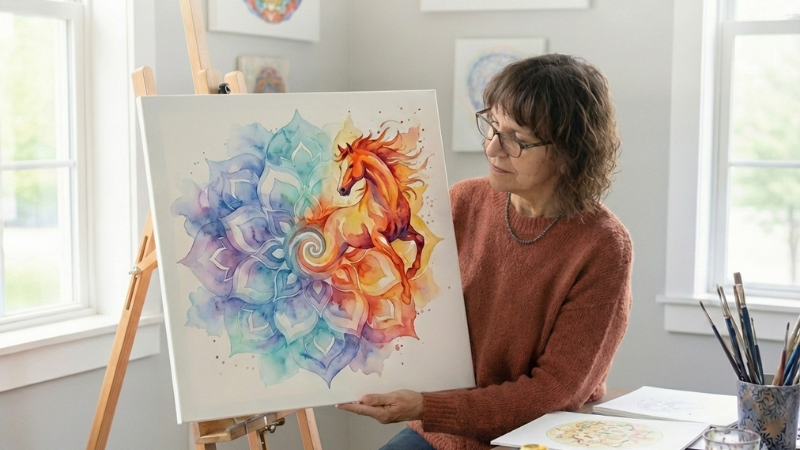
As the year bows its head, reflection arrives like a quiet visitor. The days move quickly, yet my inner clock begins to slow. I listen more closely. I choose what matters. This year opened with a bright drumbeat. A new team formed around my work. Paint returned to my hands. I felt spark and flow. Then life asked me to tend what was tender. My mother became very ill, and our path turned sorrowful. Grief rearranged my calendar and my cells. My work changed. My energy changed. I changed. I remain devoted to healing the Mother Wound. I am leaning even more into the medicine of art therapy, mandala making, and intuitive coaching. I am now a Certified Intuitive Coach, and that training has woven a golden thread through everything I offer in therapy and groups. If you would like to hear how this looks in session, I am happy to share. Why mandalas in therapy A small story. My very first painting as a pre-kindergartner was a mandala, though I did not have that language yet. I called it a Turtle. I can still feel the easel towering above me, the colors singing, my four-year-old self stepping back with a grin that felt larger than the room. Pure exhilaration. The circle kept finding me. In undergraduate art school, I drew a series called Avocados, each with a seed or an opening at the center. In graduate school, my drawings leaped off the page and became sculpted circular forms. The shape of the mandala has been walking beside me for a long time. The MARI Mandala Assessment in my practice As an art therapist I grew curious about the MARI method, the Mandala Assessment Research Instrument created by Joan Kellogg. MARI describes a cyclical journey through twelve, sometimes thirteen, stages often called the Great Round. The map is influenced by Carl Jung’s work influences the map and offers a compassionate way to witness where we are in our process. In therapy, MARI can illuminate strengths, name transitions, and support clarity for next steps. December, Stage Twelve, and the return to wholeness Here we are in the twelfth month. In MARI, the twelfth stage invites a return to wholeness through acceptance. We soften our grip. We gather what the year taught us. We allow completion to prepare the soil for beginnings already stirring. A gentle mandala practice for this month I would be honored to witness what you create. You can send a photo of your mandala through my contact page or share it on Instagram and tag @creativehealingintegration. Circle of practice I will be opening a monthly circle that journeys through the Great Round together. Each month, we will explore one stage, create a mandala, and translate its symbols into language that supports healing and next steps. This is a sweet spot where science, creativity, and intuition braid into something quietly powerful. If that resonates, add your name to the interest list, and I will keep you posted. May this month bring you a gentle settling. May acceptance open the door. May your circle lead you home. Work with me I provide art therapy and trauma therapy in New York City and online. My approach integrates the MARI Mandala Assessment, expressive arts, and intuitive coaching to support nervous system regulation, grief work, and Mother Wound healing. If you are ready for a soft return to yourself, you can schedule a consultation, and we will begin. With care,Mari Grande, LCAT, ATR BC

December Reflections. Mandalas and the Return to Wholeness Read More »

What Italy Taught Me About Trusting the Unplanned

What Italy Taught Me About Trusting the Unplanned

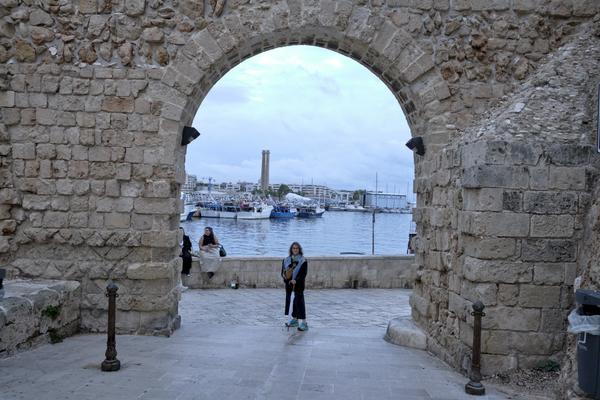
A long awaited trip to Italy turned into a lesson in trust, creativity, and the quiet work of returning to center. Join me in The Mandala Corner this November. I had been planning this trip for months. A direct flight to Italy. An itinerary filled with highlights from Puglia, Naples, and the Amalfi Coast. Even our kittens were set. We found a kind and competent live in sitter. Everything felt beautifully aligned. What could go wrong At first, everything went as expected. The usual travel bumps, small delays, moments of adjusting to a new rhythm. All part of the adventure. Until day four. A message came from our cat sitter. One of our kittens was in distress. She took him to the vet, who quickly referred him to the emergency room. They did not know if he had ingested a toxin or was having a neurological event. My heart dropped. This was not supposed to happen. Our kittens are only seven months old. They are healthy, playful, vaccinated, and full of life. Suddenly one of them was fighting for his. He was admitted to the intensive care unit. He was limp, blind, and unable to stand or eat. Even the specialists were not sure what was happening or if he would survive. My dream vacation became a stress vacation. Jet lag, worry, and sleepless nights waiting for updates. By day six, a small miracle. He turned a corner. The vets said he could go home to be monitored. The relief was enormous. I am happy to share that today he is thriving. In fact, he is playing fetch with me as I write this. As for me, the exhaustion settled in. The sore throat and cough were not just stress. I had COVID. But that is not really the story. The story is about what happened within all that uncertainty. How life gently pulled me out of my linear plans and back into the circle. The Circle That Holds Between vet calls and naps, I found myself sketching mandalas. I began noticing circles everywhere. Church domes, tiled floors, and the petals of ancient mosaics. Circles within circles. No beginning. No end. Only balance, symmetry, and quiet containment. Each one seemed to whisper, You are held. The circle reminds me of the womb. It is that original place of safety and creation. It is also the place we spend much of our lives trying to understand or return to. When things fall apart, the circle invites us back. It does not demand control or answers. It simply holds what hurts until it is ready to heal. In the MARI system, the Mandala Assessment Research Instrument, rosettes and flowers appear in Stages 8 and 9. These are the stages of personal ripening and authentic connection. Stage 8 speaks to autonomy, will, and creativity. Stage 9 expands that energy outward into connection, contribution, and love. Italy showed me both. The joy of blossoming and the necessity of softening. Of letting go of what I thought I was there to do and listening instead for what the moment asked of me. When Plans Change Do your plans always unfold the way you hope Mine did not. It is okay to feel disappointed when life takes a turn. When you only have eight days to explore a dream destination, there is not much space for wallowing. I also worried that I might have unknowingly passed the illness to others. That too became part of the lesson. Not blame, but awareness. A pause. A breath. An invitation to sit with the unknown. Sometimes we are called to trust life. Not to like or fully understand what is happening, but to allow it to move us gently back toward center. Returning to Wholeness Everywhere I looked, Italy offered reminders of the circle’s wisdom. Rose windows in cathedrals. Halos in sacred paintings. The Eucharist. Even the crown of thorns. Each one spoke of wholeness. Wholeness is not perfection. It is presence. Even in disruption, life keeps inviting us back to that original shape. The circle that heals, holds, and reconnects. I will be exploring more of this in The Mandala Corner this November. If you feel called to return to your center, I invite you to join me. With care,Mari Grande, LCAT, ATR BC

What Italy Taught Me About Trusting the Unplanned Read More »

The Circle Within. Exploring Mandalas

The Circle Within. Exploring Mandalas

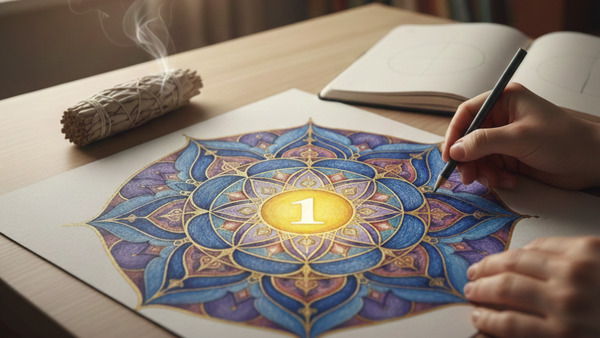
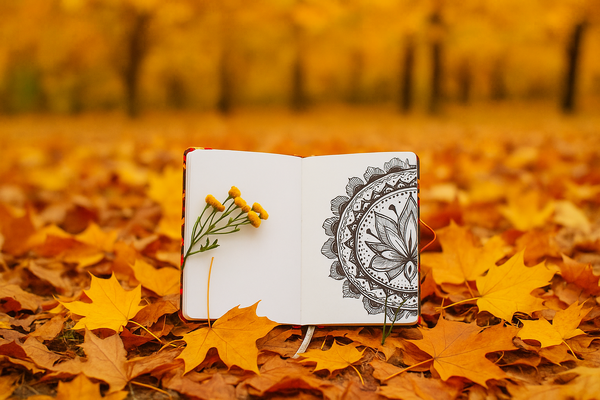
As a therapist, I return again and again to the wisdom of circles. They are everywhere. The sun that rises and sets. The rings inside a tree. The iris of an eye. A circle has no clear start and no finish. It offers a quiet wholeness that can hold everything. When I rest inside this truth, I feel both comforted and connected to something larger than myself. Mandalas have become one of my most trusted ways back to that center. Healing rarely moves in a straight line. It is more like a spiral that circles inward and loops back. Each turn brings us a little closer to ourselves. Over the years I have turned to mandalas to organize scattered thoughts, to contain joy when it feels too big to hold, and to meet grief when words are not enough. When my mother recently transitioned, I reached for this practice in a new way. I began creating a series of small mandalas in a simple notebook I keep nearby. Each circle gave me a place to set down whatever surfaced. Sometimes the feelings were heavy.  Sometimes they were tender. Sometimes they were simply confusing. Shapes and colors became a language for what I could not yet say. The practice did not erase the grief. It helped me hold it with more gentleness. You may know this feeling as well. Being pulled in many directions. Carrying emotions that are too big or tangled for speech. What might change if you imagined your life as a circle. If you placed something at its center, what would you choose. If your inner world spoke in colors or patterns, what would it say. The word mandala comes from Sanskrit and means circle. Across cultures and centuries this form has carried deep meaning. We see it in Tibetan sand paintings, in Christian rose windows, and in Native American medicine wheels. Carl Jung viewed mandalas as reflections of the self and as symbols of the psyche moving toward wholeness. Whether painted, carved, woven, or traced into the soil, mandalas help us remember our place in the greater whole. In a world that moves quickly and grows noisy, it is easy to drift away from center. Mandala making offers a way back. It is not about producing something beautiful or artistic. It is about presence. It is about listening for what wants to take form inside the circle. Sometimes this practice calms the nervous system. Other times it brings clarity or a simple sense of relief. Always it reminds us that wholeness is never lost. It may be covered for a time, yet it remains. If you would like to try, begin simply. Draw a circle on a blank page. Inside that circle let your hand move as it wishes. Lines. Shapes. Colors. Even scribbles. There are no rules and no right or wrong. Stay curious. Notice your breath as you create. See if something softens, even a little. Curious to go deeper This November, I am opening a small monthly guided mandala-making circle. We will gather to explore, create, and reconnect with your center. Each month, we will work with a theme and discover what emerges, both in the circle on the page and in the circle within you. Let me know if you are interested in joining! With care,Mari Grande, LCAT, ATR BC

The Circle Within. Exploring Mandalas Read More »

Closing Summer with Care. A Mandala Practice for the Season Ahead Why this transition matters in therapy

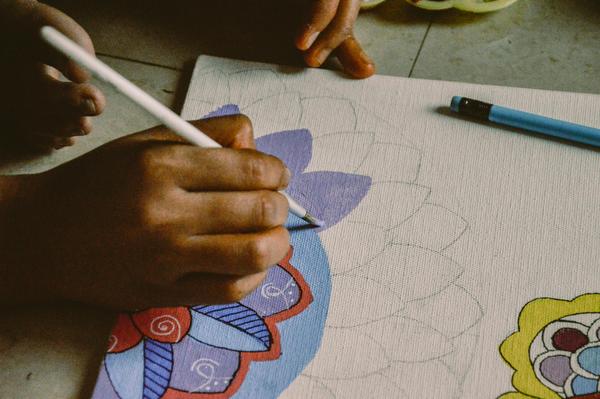
I often see late summer bring a mix of emotions. You may feel lit up by sunshine and connection, yet tired from overscheduling. Nervous systems that ran on excitement in July often ask for steadiness in September. Therapy can offer that shift. So can creative practice. Mandalas give us a simple way to return to center. The circle contains what feels scattered and helps the body and mind reorient. This is not about creating art for display. It is about presence, breath, and regulation. From outward to inward Warm months invite us outward. We join plans, travel, talk late, and say yes. These experiences can be nourishing. They can also stretch us past our limits. If you notice both gratitude and fatigue, you are not alone. Rather than push those feelings aside, try an intentional close to the season. Think of it as a gentle landing. A short reflection to land the season Take five minutes and a pen. There is no correct list. There is only honesty and care. Mandalas as a therapeutic tool The word mandala comes from Sanskrit and refers to a circle. Many cultures have used circular imagery to hold meaning. You may have seen it in Tibetan sand art, Christian rose windows, or Indigenous medicine wheels. In modern psychotherapy, Carl Jung viewed mandalas as images of the self moving toward wholeness. In the therapy room today, I use mandalas to support regulation, insight, and integration. When my own life carried deep grief after my mother’s passing, I drew small circles in a pocket notebook. Shapes and colors became a language when words were not ready. The drawings did not erase loss. They helped me hold it with steadiness. A simple practice you can try today You will need paper and something to draw with. This practice can settle your system, clarify what matters, and create a felt sense of closure. If your body is asking for structure again Some people arrive in September craving routine. Others need rest and quiet after being social for months. Both are valid. Consider one supportive boundary you can set for the next two weeks. Examples include a regular bedtime, a device-free meal, or an hour for creative play. Small and consistent often works best. An invitation for the season shift To support this transition, I am offering a small therapeutic Mandala Retreat for the close of summer and the start of fall.  We will use guided mandala making, gentle somatic practices, and focused prompts. You will be invited to release what no longer serves and to name what you want to nurture next. A somatic pause you can take right now Place one hand on your heart and one on your belly.Let your eyes soften. Inhale slowly through your nose.Hold for a quiet moment.Exhale with a soft sigh.Notice any shift in your shoulders, jaw, or chest. Ask yourself. What is one quality I want to bring into the new season?Ask again. What is one thing I am ready to release? Trust the first answer. With care,Mari Grande, LCAT, ATR BC

Closing Summer with Care. A Mandala Practice for the Season Ahead Why this transition matters in therapy Read More »

New York City in the summer. An image of apartment building and a quiet street lined with trees.

Time for a Break

August brings the full heat and heart of summer. Longer days, slower rhythms, and a quiet invitation to pause. This is your reminder to step back, go inward, and replenish yourself in ways that feel joyful, holistic, and nourishing. Whether that means traveling, reading, drawing, writing, visiting loved ones, or lounging by the water, follow what feels fun and life-giving. Personally, I’ll be tending to my energy; healing my knee, sleeping in, swimming, and reading books that light me up. And yes, I’ll still be making mandalas. Always. Here’s what I’ll continue to offer this month: And here’s what’s always available on my site: Take time to recalibrate. Quiet the noise. Come home to yourself—even if just for a little while.

Time for a Break Read More »

A blue image with the words Summer Mandala.

A Mid-Year Energy Check-In

Here we are on July 4th, the 248th anniversary of the United States. But I’m not here to talk about the news, politics, or the state of the world. There’s already so much noise on our screens, in our feeds, at the water cooler. Instead, I want to talk about something quieter, something closer in: you. What’s going on inside you—your body, your breath, your energy? Let’s take a moment for a Chakra Check-In. The Chakra system flows along the spine, a subtle energy map guiding how we take in, hold, and release energy. Even if you’ve never studied chakras, your body knows them. These sensations are messages from your subtle body, whispering truths before your mind can form them. Right now, many of us are feeling zapped—tired, ungrounded, emotionally full. And it makes perfect sense. So I’ve created something special to support you during this energetic moment: 🌞 A Summer Retreat for Restoration & Resilience Join me in a nurturing, creative space where we’ll explore the energy body through Mandala Making, meditation, and guided awareness. Together we’ll: 🌀 Work with the Chakra and Somatic energy systems 🎨 Express through therapeutic art 🔮 Receive Reiki-infused support and insight ✨ Reconnect to what lights us up—from the inside out This is a gentle, sacred space to restore your energy and feel seen—just as you are. To maintain an intimate atmosphere, the group size will be capped at 6 participants, and the replay will be available only to participants. I will release the dates for this 3-day workshop soon. In the meantime, you can sign up for my interest list for my upcoming Mandala-Making Healing Group. Click Here: The Mandala-Making Healing Interest List

A Mid-Year Energy Check-In Read More »

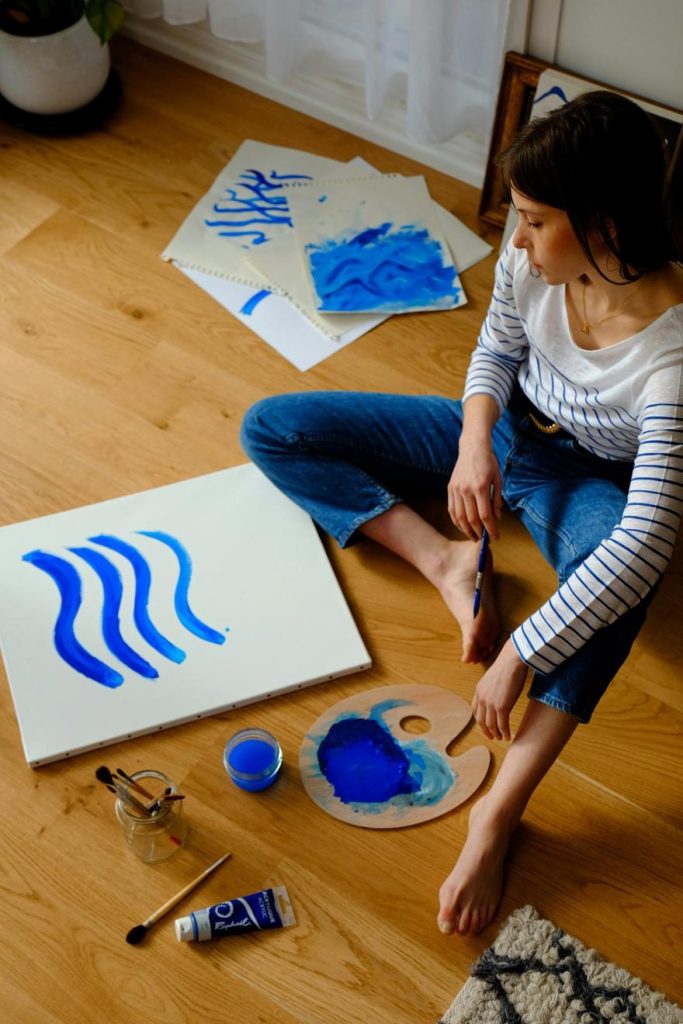
A woman is sitting on the floor painting stripes onto a canvas with blue paint.

What is Art Therapy?

I used to get that question a lot, but now, almost 30 years after becoming an art therapist, art therapy has become much more mainstream. The question has shifted from what it is to how you use it. Art Therapy uses the Creative Process and mediums to communicate and explore aspects where words fall short. While words can explain or assist in processing what emerges during sessions, it is the experience with the art form that fosters insight and transformation. In other words, art can sometimes support you with deeper access to past wounds that affect your life in the present. Art Therapy utilizes art materials provided at the therapist’s discretion, which may include pencil, paint, clay, collage, or other options. Dance/Movement Therapy, as the name implies, uses dance and movement to explore and interpret the material the client brings to the session. Drama Therapy includes acting, performing, and expressing to reach and connect with what the client is working on. Music Therapy uses sound, song, melody, instruments, and voice to address clients’ needs. Poetry Therapy is where the form and sound of the words reach what the left-brain language misses. Writing, speaking, and reflecting are part of this process. There are overlaps, and depending on the practitioner’s background, training, and experience, therapists utilize elements from other modalities to address their clients’ needs. Art therapy is a profession that requires at least a master’s level of study and training in mental health and psychology, as well as the utilization of art media and creative processes to assist people in coping with various internal challenges. In the USA, the profession is governed by the American Art Therapy Association (AATA) and the American Art Therapy Credentials Board (ATCB). They establish the standards and requirements to ensure that art therapists meet the necessary educational and practicum hours as well as fulfill the professional, legal, and ethical criteria needed to practice under the title of Art Therapist, which includes passing an exam. In New York, there is a license for Creative Arts Therapists (LCAT). LCATs must meet the standards set by AATA and ATCB and pass the New York State Exam administered by the New York State Education Department (NYSED). In New York, the LCAT is an umbrella for all CATs seeking licensure as a Mental Health Practitioner, and these are the five categories included: What Can Art Therapy Help With? Art therapy has many applications, including assisting adults and children with cognitive impairments, improving eye-hand coordination, enhancing decision-making skills, and supporting addiction recovery. In my private practice, I have witnessed adults transitioning from disorganization and scribbles to organization and form. I am reminded of Katherine, who was an artist. Her work was meant to be expressive, but instead emerged as a muddy haze. She could not find direction in her job or her relationships. She only knew she was angry and confused. Over time, while continuing to create her art in and out of sessions, giving occasional directives, and being her companion on this journey, her work became expressive and clear. Is Art Therapy Evidence-Based? Yes, Art Therapy is an evidence-based practice. Multiple research studies have supported its effectiveness for a variety of mental health conditions. Studies include neuroscience connections in that art-making affects brain activity and emotional regulation. From the start, Margaret Naumburg, educator and psychoanalyst, considered the “mother of art therapy,” began to explore the use of art therapy in the 1940s and published case studies. Adrian Hill, an artist and writer, formalized the term “art therapy” in 1942 and explored its use in mental health settings. More recently, Girija Kaimal, an art therapist, professor, and researcher at Drexel University, has conducted studies exploring the effects of art therapy on stress and brain activity. Other university research teams, including those from Drexel University and Indiana University, have also carried out studies. This is How I Discovered Art Therapy I was going to be an artist. I studied art from California to New York, practicing my skills and showcasing my work. Then, I treated myself to a summer visiting my family in Greece. I fell in love with Greece and decided to extend my stay after getting a job teaching English and securing an apartment with a view of the Acropolis. Once settled, I took what was supposed to be a short trip to the island of Chios for a Tai Chi retreat. While there, I was riding on the back of a Moped with a friend when a drunk driver hit us head-on. The next thing I knew, I was in a hospital in Athens, surrounded by friends and family. It took me two years to fully recover. My recovery included physical and art therapy. I began to use my art in ways I had not before, and it felt more meaningful to me. After my recovery, I began teaching art at an American college in Greece and acquired an art studio and an apartment near my workplace. While I loved teaching and my students, my interests expanded beyond helping my students with technique and form. My art therapist at the time encouraged me to come to New York to study art therapy under Art Robbins specifically. This meant coming to Pratt Institute, which also has fine arts programs. I ended up completing my art therapy studies there and getting a master’s in fine arts. After graduation, I found work teaching art to Special Education students in NYC. At the time, there was no line for “art therapy,” so I taught art to K-12 Students. In the classroom, I was told I could do art therapy, but I could not call it that at the time. In Special Education, there is a lot of trauma. Given my accident, early life experiences, and work with traumatized children, specializing in trauma felt like a natural choice when I started my private practice. I quickly devoured trainings that I loved and that provided me with tools to work more effectively with my clients.

What is Art Therapy? Read More »

A mother and daughter laying in the grass.

The Mother Wound Test

A Mother Wound is a cluster of symptoms that include: Being unsure of your choices. Finding fault in what you do, say, or think. Being critical of others, especially the ones closest to you. Not knowing how to communicate directly or effectively. The first step in understanding the Mother Wound is determining whether you have one. After that, you can delve deeper into the various types of Wounds, how they form, and why they form, among other aspects. That’s why it is best to begin with a Mother Wound quiz to get your bearing. When you take a test or quiz on a topic you want to explore, especially about yourself, it can serve as a guide, a tutor, or an invitation to discover which direction to take. The Mother Wound Quiz I created will capture the essence of how you’ve been affected by your nurturing experience. Is this the definitive Mother Wound test? NO What this quiz does reveal is whether your outlook and approach to life have been hampered by what a Mother Wound can imperil. Does this test gather enough information to be accurate? YES Even though we are complex and individual beings, there are very clear reveals that point out whether you are carrying a wound. You may be fully aware of your Mother Wound, curious about it, scared of it, or already on a journey to embrace and learn from your Mother Wound. What if I Have A Mother Wound? To be honest, we all carry a Mother Wound. The crucial question is whether it has been left to fester. Has it been confronted? Has it been overlooked? It is essential to understand what your Mother Wound is, how it was formed, when it developed, and if any healing has taken place. When we know a Mother Wound is affecting us, there are 2 real options: Why Understanding the Mother Wound Matters If you neglect your inner world, shaped by those who cared for you in your youth, and do not listen to your inner voice, you risk losing one of your greatest and most powerful senses—your awareness, guidance, and ability to find peace within yourself. If you sense something is lacking, if your relationships feel unstable, and if you feel as though you are struggling alone through wet, spongy, and muddy ground, understanding your Mother Wound is the beginning of something new, a beacon of light on solid ground. When you explore your attachment patterns, this sparks a journey of transformation and personal growth, particularly when you integrate your relationship with your body into the process. How the Mother Wound Can Show Up in Your Life Signs You’re Ready to Begin Healing You feel restless and decisive as if you’ve had enough. Do not ignore this energy or your body; it is communicating with you, asking that you listen to it. You want to feel better. All your hard work seems like it’s for not, but it’s been accumulating and building, and the results of your hard work are waiting for you. You are now ready to listen and receive what you only know intellectually. You want to open your heart. Your heart has been hurt, closed, and shut down, and for good reason. It’s time to trust there is more and know you cannot do it alone. This is how your heart can open. Listen and trust. Your heart is resilient and pure, always there, forever present, wanting your attention and never abandoning you. You want to heal in community. Your heart truly opens in relation to others and in community with others. You shut down from the pain or inflicted by another, and being with others is how it can open again. Of course, at first, this may be scary, and unfamiliar but deep down, you know that is where healing hurt really happens. You are resolved to do what it takes to connect with your own power. Imagine having that belief; now, feel the desire to connect to your own power in your body. Breathe into it. Notice your posture. Feel the promise, the resolve. Be with that and see where it wants to take you. What Happens When You Take the Mother Wound Test? Once you take the test, you will be given an assessment of how you’ve been affected by a Mother Wound. You will have a clearer sense of where you are in the spectrum of Mother Wounds. This will be followed up by some options for support, depending on your results. Take the Mother Wound Test If you’re ready to have a deeper understanding of how the Mother Wound could be affecting you in your life, relationships, and work, I invite you to take this quiz. When you take a test or quiz on a topic you want to explore, especially about yourself, it can serve as a guide, a tutor, or an invitation to discover which direction to take. The Mother Wound Quiz features a series of seemingly unrelated questions that evaluate whether a nurturing figure in your life has emotionally wounded you. If you have less than 5 minutes to answer 10 simple questions about yourself, much can be revealed. Take the Mother Wound Quiz here. What’s Next? If you are ready to move beyond the Quiz, I invite you to start by taking my eCourse for Daughters of Critical Mothers. My recently published Guidebook on Overcoming the Mother Wound is a supportive resource that includes resources, art and writing prompts, and more.

The Mother Wound Test Read More »

A mother and a daughter holding hands outside in a field.

Toxic Mother-Daughter Relationships

Have you ever eaten food that made your stomach sour? There is a good chance there was something toxic to you in that food. Your body knew what to do. Expel it ASAP. What if that “toxin” comes in the form of abuse, negativity, and criticism? From a mother who sees the world through her needs instead of her dependent child’s. A toxic mother-daughter relationship is when a daughter becomes an extension of her mother’s needs, rather than an extension that needs care and support to grow as a separate person, and be able to know her own voice. When a daughter is told to shut up, or that she is stupid, she is being fed negative toxins in her psyche. She is also building neural networks in the brain that begin to believe this about herself at a less conscious level. Especially when these toxins enter early in a child’s life, and are repeated over and over.  It has been found that Neurons that wire together fire together.* Meaning, when we learn something new, we create new neural networks in our brain, and if that learning is coupled with an experience, that learning is paired. Left untreated, these neural pathways continue to feed the same information to our psyche. Deepening the negative internal experience and making it feel like reality. It is through having new experiences, that we can create new, life-enhancing neural pathways where neuroplasticity can take effect and real change can develop. Examples of a Toxic Mother-Daughter Relationship Toxic environments are found in more places than Chornobyl. From age 5, Rhonda’s mother would yell and slap her because she wanted to play with her friends instead of help around the house. As she got older, she watched as her mother scammed her tenants out of their deposits, cursing and blaming them for wanting their money back. Rhonda did not have any other adult role models to look up to, only her mother and her drunk father. She only knew that she did not like her life; it did not “taste” good, and she was in fear of her mother. She learned that to be loved is to be scared, and that adults are untrustworthy. Anne’s family immigrated from another country. Even after decades of living in the US, her mother never learned English. Anne helped run the household, do chores, pay bills, and read the mail as early as she could remember. She was her father’s favorite, but he was seldom around, and his English skills were limited. When he was around, she felt special. In the evening, when her father gathered men for gambling and drinking in the attic, one of these men took 4-year-old Anne into her room; no one noticed. The following day, when Anne told her mother that it “hurt down there,” she was told to stop lying and wanting extra attention. Twenty-five years later, she came to my office, feeling overworked and stuck in abusive relationships. We started to unpack the traumas of her childhood and begin the healing process. Anne experienced a horrible trauma, sought sustenance and support, only to be fed blame, criticism, and false accusations at a most vulnerable moment. At this moment, Anne’s mother-daughter relationship became toxic. Not only did her mother turn a blind eye to her 4-year-old daughter’s needs, but she also sided with her molester, who continued the abuse for years. Anne learned to hide her needs, including for nurturing and support. When there are no words, or the pain is buried, Art is a beautiful way of tapping into the intangible effects of toxic relationships and trauma.  For instance, Manuel Neri (1930-2021), visually captured the effects of trauma in his sculpture. A California artist, he created sculptures of the human form in white plaster, much like the innocence we enter the world with. Then, he randomly spattered paint over their bodies, externalizing their inner emotional experience after a life of relationships and experiences that change us no matter how perfect we may start. Think of Rhonda, Anne, or even yourself as the pristine white plaster, and then see the splattered paint of inner emotional experiences from trauma or a toxic mother-daughter relationship. How to Heal from a Toxic Relationship With Your Mother When a child is exposed to the toxicity levels of Rhonda or Anne, or even less, certain steps can be taken to begin the healing process. Take an inventory: Areas to consider:  Relationships – What is the quality of your friends, lovers, partner? This is where our wounds will be acted out or healed, but we need to know if we are healing or hurting. Spirituality – What is your relationship to your wise self, higher self, best self? If you yearn to have more dimensionality or practices, listen to that calling. Mental Stimulation – How are you feeding your mind? Where our thoughts go, energy flows, let your mind be fed as much nutrition as your body. Physical Stimulation – Is your body getting the movement it needs? Each person’s needs are different, but knowing what yours are is as important as getting the activity your body needs. Well-being – Do you feel good about your daily choices? Diet, rest, habits. We now know how much everything is connected, mind, body, and spirits.  Work-life – Is there balance, satisfaction, or dissatisfaction? There will be short phases of over or under-working within reason. The true tell is whether you feel it is a choice, your choice, or if you have ongoing resentment and fatigue. This is a list to spend time with, journal about, and meditate on. You may be surprised by some of your answers. It is also a great exercise to do with a group of others. Mother wounds were not created in isolation, nor can they be healed in isolation. We need each other, we need the best of ourselves and the best of each other to give support, feedback, and the energy of a loving community. Structured

Toxic Mother-Daughter Relationships Read More »

Scroll to Top